Monday, 14 April 2014

Why I love to Read, part 9


Why I Love to Read- Monday special.
Reason number 9: Reading develops bonds within the family.
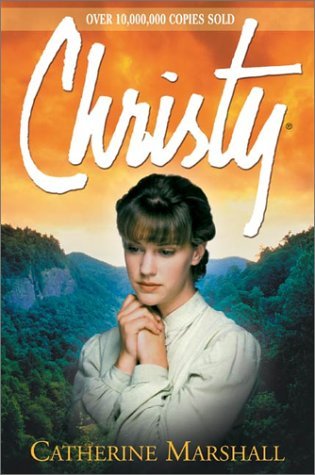
229123  When John had his first eye surgery, about 40 years ago, I read aloud to him.  We still remember "Christy"- a novel about a young well-to-do young girl from South Carolina who goes to the Appalachians in Tennessee in 1912 to teach impoverished children.  The way these people lived was fascinating for both of us.  The novel was based on the experience of the author's mother.


A Lesson Before Dying novel.jpg                               We also enjoy reading while on road trips.  We remember reading "A Lesson Before Dying" by Ernest Gaines.  It really was a fascinating story of a young black man in Louisiana in the 1940's.  He was about to go to the electric chair for murder.  His grandmother wanted her grandson to die like a man, so she begged the school teacher to teach Jefferson some self-esteem and pride in his identity as a black man.  It was about 'dying with dignity'.
As we were finishing our trip, we were driving in the rain while I was trying to get the book finished.

Over the years, we have read many books in the car, on the road or in the park. We remember "Hawaii" by James Michener and "East of Eden" by John Steinbeck, both being great 'park' books.


I also have 'reading' connections with the grandchildren.  I remember reading "Anne of Green Gables" with Kaitlyn on the riverbank in the park.  When David was very little he was fascinated with "Journey to the Centre of the Earth".


We often talk about books and they tell me what they are reading.  Sometimes I am able to get a copy and read the book so that we can discuss it.  "The Hunger Games" was discussed often. 
Hunter, at 15, convinced me to read "A Long Way Gone: Memoirs of a Boy Soldier".  Grim! 
The grandchildren in Michigan read the books for the Troyberry Awards.  I often read some of those titles.
I am always delighted when the children are required to read "To Kill a Mockingbird" or "Lord of the Flies" for school. 
We chatted about books on their recent sleepover. 


Wednesday, 9 April 2014

The McCourt boys


Teacher Man (2005)'Tis: A Memoir (1999)
Singing my him song (2000)A Monk Swimming (1998)
                                                Frank and Malachy McCourt 
These brothers are both great storytellers.  They have each written two biographical books that are fun to read.
I always thought that Frank was the more steady, educated, professional man, while Malachy was the drinking, fighting, womanizer.
But they both have that Irish wit and Irish temper.  Frank was married three times and died in 2009.  He is best known for winning a Pulitzer prize for "Angela's Ashes".
Malachy had a radio show and made appearances on T.V. shows like "The Tonight show".  He acted and dabbled in politics.  He is now 82.
Both were interesting men with charm and fascinating stories.
In later years, they did a two-man show called "A Couple of Blaguards".


"Teacher man" is our current book club selection.  I had read the other books five years ago, so I am enjoying reading this book now and remembering the McCourt brothers.

Monday, 7 April 2014

Why I Love to Read, part 8


Why I Love to Read- Monday special.
Reason number 8:
Some books have a premise that is really wacky!

The Year of Living Biblically is about a quest to live the ultimate Biblical life. To follow every single rule in the Bible as literally as possible. The author knew these rules:
  • The Ten Commandments
  • Love thy neighbor
  • Be fruitful and multiply
But also, he found hundreds of oft-ignored ones.
  • Do not wear clothes of mixed fibers.
  • Do not shave your beard
  • Stone adulterers
And he tried every single rule!  The stoning was a problem.
He wanted to experience the Bible himself and find out what’s good in it, and what’s maybe not so relevant to the 21st century.
He met with many religious groups from creationists, to Hasidic Jews, even snake handlers.  It became a spiritual journey and it is fascinating!  And humorous! And wacky!

Another book with a wacky Biblical theme....


Mackenzie Philips, a father of five, is devastated by the death of his daughter.  He gets a note leading to a visit with God, Jesus and the Holy Spirit.
But...
God the father is an African American woman who calls herself Papa; Jesus is a Middle-Eastern carpenter; and the Holy Spirit is an Asian woman .

The title of the book is a metaphor for the house you build out of your own pain- the place you get stuck, hurt and damaged.


The author was a hotel night clerk and self-published this book, just intending it for his own family.  But it became very popular and sold over a million copies.


Thursday, 3 April 2014

How do authors get ideas for novels?

Where do authors get their ideas for a novel?
Well, often they are inspired by stories of their ancestors.
Lalita Tademy


Lalita Tademy was the vice-president of Sun Microsystems when she left the corporate world to immerse herself in tracing her family's history.  She was obsessed to find every root, every branch, stripping the bark and turning over every hidden leaf and stem of her family tree to accumulate the family stories.  With over 1000 documents, she wrote "Cane River", based on the lives of four generations of Creole slave women in Louisiana- her ancestors.

Oprah chose this book for her book club in 2001.
When I returned from a trip to Georgia in 2002, I wanted to read about the south. I became so engrossed in this novel!  It allowed me to get inside the skin of a slave. It was an amazing experience for me!  Loved it1
Pam Lewis
Pam Lewis  was inspired by her grandmother's stories to write  "A Young wife".  Her grandmother told of her life as a very young bride in a place called Comodoro Rivadavia, Argentina.  She recalled handsome gauchos who rode into town on fabulous horses decked in turquoise and silver, and of their thunderous races down the dusty main street.
Pam had many questions but her grandmother rarely visited, and her mother refused to speak of her father, would not even give her his name.
Later in life, Pam learned the whole story of her grandmother's life and wrote about it in this book.
I loved this book and here is Pam talking about the book.


Sunday, 30 March 2014

Why I Love to Read, part 7


Why I Love to Read- Monday special.
Reason number 7:
I love to connect with 'the community of readers'.
Book clubs have always been important for me.  Reading a book is one thing, but discussing it really makes it come alive.  I have been involved in many book clubs over the last 18 years.

Monday Night book club
Preston library book club
A few years ago, I discovered Bookwomen,
 an opportunity to travel and discuss books at the same time.

In Arizona...

Or Banff...

                                                                  Or England....

I have also been fortunate to have many friends that enjoy discussing books over coffee or lunch.
I have even been known to discuss books with complete strangers.

Friday, 28 March 2014

Woefield Poultry Collective


What can I say about this book?
A fascinating premise.  Prudence Burns, an energetic, twenty-something New Yorker, inherits a farm that has much debt.  With her Polyanna attitude, she takes on the task of getting the farm out of debt. The most interesting aspect of the story is the cast of characters that appear and become part of the story.
Earl-80-something, banjo-playing foreman
Seth- alcoholic, boy-next-door who has been traumatized by scandal
Sara- highly organized 11-year-old, looking for a home for herself and her chickens.


A very interesting group of misfits who find acceptance and success in an unusual way. 
Highly entertaining and humorous.


Unusual characters, fun plot, good setting- but the language!  O, the language!
There are short chapters.  Each chapter is narrated by one of the main characters.  I realize that some of these characters may have 'salty' language, but the extent of it spoiled the story for me- too crude and gross.  I found it vulgar!
A note from the author: "I was trying to pay cockeyed homage to some of my favourite novels, particularly Stella Gibbons' Cold Comfort Farm."


Well, I have read Cold Comfort Farm and really enjoyed it, which proves that the crude language was not necessary to the story.


This novel was written in 1932.
A T.V. movie was made in 1995.


I just returned from the book club discussion of "The Woefield Poultry Collective".  All ten of us enjoyed the book and only  half of the group felt that the language was a problem.  I have taken on the task of writing to the author to express my views on the language.

Tuesday, 25 March 2014

The Purchase


A fascinating book written by a fascinating woman!
Linda Spalding was born in Topeka Kansas,
 the daughter of Jacob Alan Dickinson. 

 She has lived in Mexico and Hawaii
 and moved to Toronto in 1982.  
She is married to Michael Ondaatje.


Linda's father, a lawyer, was a champion of integration and worked on desegregating schools.  So it was a great surprise when Linda realized that her ancestors had owned slaves.
Also, Linda had been interested in her early years in Quakerism.  Her parents were not pleased, but she also discovered that her ancestors were Quakers.
How did this happen?  Quakers who owned slaves?  So she began her research.  The novel is based on her great, great, great grandfather, Daniel Dickinson.


I have read this book twice.  The first time I finished the book, wishing that I could discuss it with someone, but I did not know anyone who had read it.  This time I am reading it for a book club, so will have lots of opportunity to discuss it.
In 1798, Daniel Dickinson, a young Quaker father and widower, left his home in Pennsylvania to begin a new life in Virginia.  He had five children and a 15-year-old wife that he married after his wife died.  This young girl, Ruth, is an important part of the story, as she had lived in an almshouse until Daniel brought her to help with his children.
The story is really set in motion when Daniel attends an auction and accidentally raises his hand when they are selling a slave boy- Onesimus.  He does not have the money for the boy, nor does he believe in slavery.  So how did that happen? 
 I found the first half of the story mesmerizing.  The challenge of creating a home for seven people from nothing! Fascinating!  And so well-written!
However, the strong narrative began to fragment when the children grew up and each had struggles and disasters. More characters were added and the strong thread of the story began to unravel.
Daniel is a very disappointing character, who preaches the Quaker doctrine, but shows no love or compassion or forgiveness.  He struggles with his conscience and perhaps finds resolution in the end.  But I found the ending as evasive as the slave auction.  I never really understood Daniel- or maybe I did and I didn't like him.
  
Well, now I have been to a discussion of this book and I am less enthusiastic about the book.  There was a range of interest in the book but we seemed to agree that the author is better at describing nature than people.  There is a great sense of place but what are the characters thinking? And especially the main characters, Daniel and his child-wife Ruth. What were they thinking?  
Lots of plot, lots of characters, but what were they thinking??????