I enjoy four things about novels- characters, setting, plot, and language. What I enjoyed most about this novel are the main characters and the setting.
Noah Salvaggio was a newly-retired professor in New York, planning to spend his 80th birthday in the place of his birth- Nice, France. His wife and sister were dead and he had no children. So he was free to travel. He had found, in his sister's belongings, photographs that had been taken by his mother during the war, and those photos brought up many questions about his mother's life. He knew that his mother had sent him from Nice to New York when he was four, to live with his father, while she stayed behind for two years. What happened during those two years?
Into the story comes an 11-year-old boy, whose father has died of a drug over-dose and his mother is in jail. Michael is the name of the boy and he is the grandson of Noah's sister. And he has nowhere to go because his grandmother (his mother's mother) had been caring for him, but she also died. Could you follow all that? This boy has been through much turmoil and is the only living relative of Noah- Noah's great nephew!
As unreal as that may sound, it makes for a great story of an 80-year-old man and an 11-year-old boy. And the setting to the story is Nice. Two interesting characters in the French Riviera, who have never met before. The generation gap is so obvious as these two strangers discover that they are more alike than different. In fact, they are AKIN.
Emma Donoghue was inspired to write about Nice after spending two years there with her partner and her children. She felt that she never became fluent in French, but there are many French terms in the novel, as she felt that she was writing a love-letter to the country that fascinated her so much.
As Noah searched out the story of his mother's photographs (with the help of computer-game obsessed Michael), there is an interesting look into the art world of twentieth-century France.
Books! Books! Books! Can't get enough of them! But a book is never fully appreciated until it is discussed- with one person, many people, or on a blog. Since I retired, I have always belonged to book clubs - one, two, three, or even four at a time. I always have an opinion about the book I am reading. It isn't always the popular opinion, but it is mine. This is what will be on my blog.
Friday, 10 January 2020
Monday, 6 January 2020
Emma Donoghue
![]() |
| Emma Donoghue |
The author, Emma Donaghue came to Cambridge on her recent book tour. It was the first well-known author event in our newly-acquired library building, The Old Post Office.
I had read her novel, "Room", which had been a great success, although it had a very sad premise.
It is about a woman who is imprisoned by a rapist in a windowless shed, where she gives birth to Jack. The story is told in the voice of 5-year-old Jack who has never seen the outside world. I did not find the voice credible- the expressions and vocabulary. But perhaps it was the darkness of the story that bothered me. However, I was impressed with the creativity of the mother to structure the boy's life, year after year, in one room.The book was made into a movie and even became a stage play with songs. So it had many covers.
Emma is a very interesting speaker. She is involved in so many projects. While raising two children, she takes advantage of every spare moment to write or research. She has been able to support herself with her writing since she was 23.
Emma was born in Dublin, Ireland in 1969, and has degrees from Dublin University as well as Cambridge University in England.
She spent years commuting between England, Ireland and Canada, until 1998, when she settled in London, Ontario, where she has been writing youth fiction and non-fiction as well as teaching creative writing.
She has many projects going at any time - film, T.V., and even radio plays. You can understand that she would be an interesting speakerHer visit to Cambridge was part of her book tour for her new novel. We were very fortunate to have her in our city and I enjoyed her presentation very much. And so, even though I wasn't thrilled about "Room", I decided to read "Akin". This novel is a return to a relationship between an adult and a child. But the premise is much brighter. I will write about it on my next blog.
Back to the covers for "Room". How do you like them? I love covers and I quite like the last one- creative like the novel. That cover would have caught my eye in the bookstore and I might have read it just for that reason.
Wednesday, 1 January 2020
"Unfollow" by Megan Phelps-Roper

The subtitle of this book is "A memoir of loving and leaving the Westboro Baptist Church". And the memoir clearly shows how much the author loved her large family. She had 10 siblings, many aunts, uncles and cousins, and her grandfather was the founder of the church, which was mostly comprised of family members.
Her grandfather was angry about the gay activity he believed was happening in their local park in Topeka, Kansas. So the church began picketing, causing a disturbance with their hateful signs. Megan joined the picket line when she was five.
The picketing and the signs grew worse over time. The U.S was involved in wars and the church protested by picketing at the funerals of soldiers. Her grandfather believed that everyone was going to hell, except his church members. So it was a case of them against the world. They gained world-wide attention and were the subject of a documentary by the BBC called "The most hated family in America".
The church preached hate, but Megan also experienced love in the family. What a very difficult combination!
As Megan grew up, she became aware of the inconsistencies in the church doctrine. Since she had no social life apart from her family, she learned about the world through her Twitter account, and eventually found strength and support among her Twitter followers.

Here is Megan as a dutiful church member. She even joined the picket line when it was at her school.
This memoir is a reminder of the damage of extremism. Obviously, Megan had no idea how hurtful her actions were. She was just an obedient daughter and granddaughter, who thought her family was RIGHT.
In 2012, at age 26, Megan left the church, left her family, and basically left her life behind. Her description of this time is heart-breaking!
After great emotional and spiritual turmoil, Megan was able to begin a new family. She is trying to make up for the harm she caused, by speaking out about extremism in any form. She is courageous and loving, and her memoir is heart-breaking and insightful!
How I discovered this memoir:
My daughter loves to send me lists of books. This book was included in a list of "Seven of the Most Inspiring Novels and Memoirs from 2019" from Greater Good magazine: "Science-based insights for a meaningful life". An excellent memoir!
Thursday, 19 December 2019
"This is How it Always Is"
This novel begins with Rosie Walsh and her husband Penn, who have four boys - Roosevelt, Ben, and twins Rigel and Orion. Four boys! But Rosie wanted a daughter, since her only sibling, a sister, Poppy, died at ten.
Quote:
"Was she just trying endlessly to make a daughter to fulfill an ancient dream of her sister's, a ten-year-old's dream at that? Did she believe this daughter would grow up and be, at ten, the little girl she'd lost, Poppy herself, picking up where Poppy had left off, fulfilling all the promise of that stymied, hacked-off, stubbed-out little life? As long as she kept her womb full, might Poppy, some version of Poppy - some waiting, watchful, wandering Poppy demon- gather up all her errant atoms and come home again?"
Well, she did have another child, but it was not a daughter- at first. Rosie and Penn's last child was born a boy, but he wanted to dress like a girl. The parents were loving and accepting of his wishes and tried to accommodate the challenges, as their son transitioned to a daughter.
This novel raises many questions that will be interesting to address at the next book club meeting.
The author explains her interest in such a story in the notes at the end, where she tells of her transgender child.
What would the author want us to understand from this novel, that is not biographical although based on her experience?
"So one of the things that I hope is that people who read this book will read it and forget about the transgender issues and just be in the embrace of this family and realize that this family is like all families: They love and they keep secrets from one another and they protect one another and they struggle with how to do that and they have these challenges. And it's hard, but it isn't scary and it isn't abnormal at all." (Laurie Frankel)
I appreciated the opportunity to read such a novel. I enjoyed the family of five children with such permissive parents. It was a very creative family and fun to read about their life. However, I struggled with the author's syntax. Her sentences were often long and confusing. Was that on purpose, to reflect the chaos in the home?
This may say more about me, because I realize that modern authors create their own path and do not follow the grammar of the past.
Quote:
"Was she just trying endlessly to make a daughter to fulfill an ancient dream of her sister's, a ten-year-old's dream at that? Did she believe this daughter would grow up and be, at ten, the little girl she'd lost, Poppy herself, picking up where Poppy had left off, fulfilling all the promise of that stymied, hacked-off, stubbed-out little life? As long as she kept her womb full, might Poppy, some version of Poppy - some waiting, watchful, wandering Poppy demon- gather up all her errant atoms and come home again?"
Well, she did have another child, but it was not a daughter- at first. Rosie and Penn's last child was born a boy, but he wanted to dress like a girl. The parents were loving and accepting of his wishes and tried to accommodate the challenges, as their son transitioned to a daughter.
This novel raises many questions that will be interesting to address at the next book club meeting.
The author explains her interest in such a story in the notes at the end, where she tells of her transgender child.
What would the author want us to understand from this novel, that is not biographical although based on her experience?
"So one of the things that I hope is that people who read this book will read it and forget about the transgender issues and just be in the embrace of this family and realize that this family is like all families: They love and they keep secrets from one another and they protect one another and they struggle with how to do that and they have these challenges. And it's hard, but it isn't scary and it isn't abnormal at all." (Laurie Frankel)
I appreciated the opportunity to read such a novel. I enjoyed the family of five children with such permissive parents. It was a very creative family and fun to read about their life. However, I struggled with the author's syntax. Her sentences were often long and confusing. Was that on purpose, to reflect the chaos in the home?
This may say more about me, because I realize that modern authors create their own path and do not follow the grammar of the past.
Tuesday, 10 December 2019
"Charlotte's Web" by E.B.White
book club choice: "Charlotte's Web"I love the fact that that one of my book clubs chooses a children's classic every year, along with several adult classics. I found this book about that very topic: "The Joy of Reading Children's Literature as an Adult". It was interesting to remember all those wonderful early novels for children, as well as picture books.
Garth Williams, who wrote the foreword for "Charlotte's Web", admits to not reading this book as a child because the cover made him feel that the book 'guaranteed misery'.
I agree that the cover is not great for children. So I searched for other covers. I found these:
***********************************************************************************************************
I like this cover, since it features Wilbur, who is the main character in the story.
The second cover illustrates the power of friendship, one of the themes in the novel.
The last cover was published after the movie was made. It is similar to the original but the expressions on the faces of Fern and the animals are much more serene.
E.B.White (Elwyn Brooks) was a writer for the New Yorker Magazine, as well as the author of children's novels. He wrote "Stuart Little" and "The Trumpet of the Swans".
Obviously, he enjoyed animals. He gave them interesting characteristics. He also enjoyed nature and describes the changing of the seasons in lovely detail.
"All that I hope to say in books, all that I ever hope to say,
is that I love the world".
(E.B.White 1899 - 1985)
Friday, 6 December 2019
"Nothing to See Here" by Kevin Wilson
This book was a gift to me, and I started reading it immediately because I had just finished reading that group of self-help books and wanted something different.
Well, this is very different! The premise is quite bizarre. There are children in the novel who spontaneously combust. That's right, they burst into flames.
I was so fascinated, that I listened to an interview with the author, and it put everything into perspective. The author, Kevin Wilson, has always been obsessed with spontaneous human combustion. As a child, he felt that he could burst into flames at any time. He describes the feeling as electric. He felt that, if he could burst into flames, he could get rid of this 'thing inside him'. As an adult, he discovered that he had Tourette's Syndrome.
And so, as an adult, he wrote a book with the theme of human spontaneous combustion, expecting to get the obsession out of his system. But, no, he continued to write books with this theme.
His other theme is family- the family you are born into and also the family that you make. When he had children, he felt a great responsibility to protect them, but also to prepare them for the world.
This novel is about a young woman who felt unloved and adrift in the world. When she began caring for these two children who combust when they are agitated, she found purpose and worth.
This author has a good following of readers. He does write well and I found myself engrossed in the novel even though I would have appreciated less strong language.
Well, this is very different! The premise is quite bizarre. There are children in the novel who spontaneously combust. That's right, they burst into flames.
I was so fascinated, that I listened to an interview with the author, and it put everything into perspective. The author, Kevin Wilson, has always been obsessed with spontaneous human combustion. As a child, he felt that he could burst into flames at any time. He describes the feeling as electric. He felt that, if he could burst into flames, he could get rid of this 'thing inside him'. As an adult, he discovered that he had Tourette's Syndrome.
And so, as an adult, he wrote a book with the theme of human spontaneous combustion, expecting to get the obsession out of his system. But, no, he continued to write books with this theme.
His other theme is family- the family you are born into and also the family that you make. When he had children, he felt a great responsibility to protect them, but also to prepare them for the world.
This novel is about a young woman who felt unloved and adrift in the world. When she began caring for these two children who combust when they are agitated, she found purpose and worth.
This author has a good following of readers. He does write well and I found myself engrossed in the novel even though I would have appreciated less strong language.
Sunday, 1 December 2019
Self-help book, part 4
The basis of the book is the fact that there is and always has been only one spiritual teaching, although it comes in many forms. And often, other things obscure the spiritual essence.
This may be considered 'New Age', but it is really getting at the root of all world religions.
Quote: "Love, joy and peace are deep states of Being- three aspects of the state of inner connectedness with Being."
I found the book simple but profound. It was wonderful to discuss the book in depth with two other family members- each of us in different stages of life.
I read "A New Earth" eleven years ago. Perhaps because my brain was younger, I was able to understand it more clearly. I wrote this review at the time:
In the first chapter, Tolle introduces readers to enlightenment and its natural enemy, the mind. He points out how we create our own pain and shows how to have a pain-free identity by living fully in the present. The author shows how to connect to the essence of our Being: "the eternal, every-present One Life beyond the myriad forms of life that are subject to birth and death".
![]() |
| Eckhart Tolle |
Keeping focussed on the present is more difficult as I age, and I appreciate the reminders and suggestions for ways to stay present and 'live in the Now'.
I just watched a lecture by Eckhart Tole where he talked about the importance of laughter. If you have ever listened to Eckhart, you may appreciate how bizarre that experience was. He is so droll that it made me laugh!
Friday, 29 November 2019
Self-help book, part 3
"You Can Heal Your Life" is another book that was recommended by my naturopath.
I had read it ten years ago, but it was interesting to revisit this philosophy.
This was my review ten years ago:
**********************************************************************************
Louise Hay is a pioneer in the growing belief that mental patterns create diseases in the body.
Basic Beliefs:
We are each responsible for all of our experiences. Every thought we think is creating our future. We create every so-called illness in our body. Resentment, criticism, and guilt are the most damaging patterns. We must release the past and forgive everyone. Self- approval and self- acceptance in the now are the keys to positive change. When we really love ourselves, everything in our life works. What we give out, we get back.
Almost half of the book is a list of physical problems, the probable cause and the new thought pattern (affirmation).
My affirmations:
"I know that Life always supports me".
"Be anxious about nothing, but in everything give thanks".
************************************************************************************************************************
Looking back, I realize that these things are easier to say than to put into practice. Louise Hay's belief that disease is caused by mental patterns can cause great guilt when physical problems show up. It also dismisses the reality that the body does age.
However, each of these self-help books has something to offer for improvement and enjoyment of life. They can each be revisited from time to time.
I had read it ten years ago, but it was interesting to revisit this philosophy.
This was my review ten years ago:
**********************************************************************************
Louise Hay is a pioneer in the growing belief that mental patterns create diseases in the body.
Basic Beliefs:
We are each responsible for all of our experiences. Every thought we think is creating our future. We create every so-called illness in our body. Resentment, criticism, and guilt are the most damaging patterns. We must release the past and forgive everyone. Self- approval and self- acceptance in the now are the keys to positive change. When we really love ourselves, everything in our life works. What we give out, we get back.
Almost half of the book is a list of physical problems, the probable cause and the new thought pattern (affirmation).
My affirmations:
"I know that Life always supports me".
"Be anxious about nothing, but in everything give thanks".
************************************************************************************************************************
Looking back, I realize that these things are easier to say than to put into practice. Louise Hay's belief that disease is caused by mental patterns can cause great guilt when physical problems show up. It also dismisses the reality that the body does age.
However, each of these self-help books has something to offer for improvement and enjoyment of life. They can each be revisited from time to time.
Monday, 25 November 2019
Self-help books, part 2
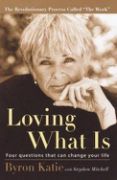
At 43, Byron Katie had three children and was not happy in her second marriage. She suffered from depression and addictions, and spent two weeks in a counseling center, where she had 'an epiphany'. She began sharing her philosophy of self-inquiry which she called 'The Work'.
Her book is filled with examples of ''The Work, using a series of questions and 'the turnaround'. It doesn't always make sense to me, but she does have some philosophy worth considering:
1.) "All of the stress we feel is caused by arguing with what is".
2.) There are 3 kinds of business- mine, yours and God's. Stay in you own business.
3.) "Behind every uncomfortable feeling there's a thought that isn't true for us".
4.) "The world is the mirror image of your mind. If you experience chaos and confusion inside, your external world has to reflect that."
Much to think about here. Her questioning method can change the way you look at the small challenges in life, but I read comments from a psychologist, saying that this approach would not be helpful in more serious situations, such as trauma.
In my last posting, I mentioned that the title "Goddesses Never Age" was not a helpful title for me. But this short catchy title has had a good effect on me. It is a simplified version of "The Power of Now" (a book that I will discuss later) - living in the moment and appreciating 'what is'. In fact, "Loving What Is".
Her book is filled with examples of ''The Work, using a series of questions and 'the turnaround'. It doesn't always make sense to me, but she does have some philosophy worth considering:
1.) "All of the stress we feel is caused by arguing with what is".
2.) There are 3 kinds of business- mine, yours and God's. Stay in you own business.
3.) "Behind every uncomfortable feeling there's a thought that isn't true for us".
4.) "The world is the mirror image of your mind. If you experience chaos and confusion inside, your external world has to reflect that."
Much to think about here. Her questioning method can change the way you look at the small challenges in life, but I read comments from a psychologist, saying that this approach would not be helpful in more serious situations, such as trauma.
In my last posting, I mentioned that the title "Goddesses Never Age" was not a helpful title for me. But this short catchy title has had a good effect on me. It is a simplified version of "The Power of Now" (a book that I will discuss later) - living in the moment and appreciating 'what is'. In fact, "Loving What Is".
Thursday, 21 November 2019
Self-help books, part 1
My naturopath discovered that I am a reader and she has been recommending books to me. They are about the mind/body connection.
Christiane Northrup, the author of "Goddesses Never Age" is a physician and the book is focussed on the unity of the mind, body, emotions and spirit.
Quotes: "It's about pointing out everything that can go right with your body and how to embody balance and health regardless of your state of health and well-being now."
"The number-one thing you can do for your health is to live joyously, indulging in sustainable pleasure".
Christiane believes that our health is affected more by our beliefs than by our biology, and points out how to change our thoughts on aging. This is precisely why I need to read this book. I used to say, "Nothing good happens after 80" and, unfortunately, my body was listening.
This book is dense with ideas and suggestions for every part of your body. And there is a good index to find the parts that apply to your situation.
The title is not helpful to me. Goddesses may not age, but real women do. It seems that acceptance and understanding are better than denial.
Christiane Northrup, the author of "Goddesses Never Age" is a physician and the book is focussed on the unity of the mind, body, emotions and spirit.
Quotes: "It's about pointing out everything that can go right with your body and how to embody balance and health regardless of your state of health and well-being now."
"The number-one thing you can do for your health is to live joyously, indulging in sustainable pleasure".
Christiane believes that our health is affected more by our beliefs than by our biology, and points out how to change our thoughts on aging. This is precisely why I need to read this book. I used to say, "Nothing good happens after 80" and, unfortunately, my body was listening.
This book is dense with ideas and suggestions for every part of your body. And there is a good index to find the parts that apply to your situation.
The title is not helpful to me. Goddesses may not age, but real women do. It seems that acceptance and understanding are better than denial.
Wednesday, 13 November 2019
"Little Fires Everywhere" by Celeste Ng
In 1912, a religious group of Shakers lived near Cleveland and set up a town with many rules: rules about the streets, the homes, and the behaviour of the residents.
This novel takes place at the end of the 20th century, and the residents of Shaker Heights are no longer Shakers, but still live regimented lives.
The Richardson family have four teenagers, living this regimented life, when Mia and her daughter, Pearl, move into a townhouse owned by the Richardsons. Mia is a Bohemian artist who lives a very unorthodox life. The contrast between these two families, forms much of the story.
When I watched interviews with the author, she talked a lot about class and race. She is Asian and, in the novel, questions whether a white couple can raise an Asian child.
There is a theme of mother-daughter relationships and issues around adoption and abortion.
This book is very popular and I have read many reviews from readers raving about the book. Even the few criticisms of the book that I have seen, have not mentioned the one thing that JUMPED OUT at me.
This novel begins at the end. The 'little fires' mentioned in the title, break out in the first chapter. The rest of the novel tells the backstory of everyone- why there were 'little fires', that turned into a big fire.
I guess this is another example of how readers react differently to a book. The characters were important to other readers. I was surprised about 'the form' of the story, loving a novel that uses the introduction to 'introduce the characters, time and place'. I missed that format.
When I finished the book, I was interested in doing some research about the Shaker religion, and was fascinated by this picture of their singing and 'shaking'. I just wished that it was a video!
This novel takes place at the end of the 20th century, and the residents of Shaker Heights are no longer Shakers, but still live regimented lives.
The Richardson family have four teenagers, living this regimented life, when Mia and her daughter, Pearl, move into a townhouse owned by the Richardsons. Mia is a Bohemian artist who lives a very unorthodox life. The contrast between these two families, forms much of the story.
When I watched interviews with the author, she talked a lot about class and race. She is Asian and, in the novel, questions whether a white couple can raise an Asian child.
There is a theme of mother-daughter relationships and issues around adoption and abortion.
This book is very popular and I have read many reviews from readers raving about the book. Even the few criticisms of the book that I have seen, have not mentioned the one thing that JUMPED OUT at me.
This novel begins at the end. The 'little fires' mentioned in the title, break out in the first chapter. The rest of the novel tells the backstory of everyone- why there were 'little fires', that turned into a big fire.
I guess this is another example of how readers react differently to a book. The characters were important to other readers. I was surprised about 'the form' of the story, loving a novel that uses the introduction to 'introduce the characters, time and place'. I missed that format.
When I finished the book, I was interested in doing some research about the Shaker religion, and was fascinated by this picture of their singing and 'shaking'. I just wished that it was a video!
Tuesday, 5 November 2019
"Sarah's Key" by Tatiana de Rosnay
Do we need another book about the holocaust? Well, yes, I think we do. Especially when there is a different twist to the story.
This is a novel, beginning with two storylines. In Paris (1942), the local police are 'rounding up' the Jews and moving them into camps. The first storyline concerns one family where Sarah, 11, locks her brother in a closet in order to keep him safe when the police arrive at the door.
The alternating storyline follows Julia, in 2002, a reporter who is doing research for an article for the 60th commemoration of this event.
Halfway through the book, the storylines connect. There are a number of characters to keep straight- from each storyline. But I found the second half of the story less traumatic and easier to read.
This novel was made into a movie, and the cover of the book was changed to reflect the movie. I usually dislike this happening, but I do prefer this cover because it shows the two storylines- the reporter at the top and Sarah at the bottom, trying to find her way back to the cupboard where she left her brother. The reporter's picture dominates the cover, but actually that is the main focus of the book. Sarah's story is secondary but central to the novel. The expression on the reporter's face is perfect, since she was very disturbed by the facts that she uncovered. And readers will also be disturbed- and should be!
This is a novel, beginning with two storylines. In Paris (1942), the local police are 'rounding up' the Jews and moving them into camps. The first storyline concerns one family where Sarah, 11, locks her brother in a closet in order to keep him safe when the police arrive at the door.
The alternating storyline follows Julia, in 2002, a reporter who is doing research for an article for the 60th commemoration of this event.
Halfway through the book, the storylines connect. There are a number of characters to keep straight- from each storyline. But I found the second half of the story less traumatic and easier to read.
This novel was made into a movie, and the cover of the book was changed to reflect the movie. I usually dislike this happening, but I do prefer this cover because it shows the two storylines- the reporter at the top and Sarah at the bottom, trying to find her way back to the cupboard where she left her brother. The reporter's picture dominates the cover, but actually that is the main focus of the book. Sarah's story is secondary but central to the novel. The expression on the reporter's face is perfect, since she was very disturbed by the facts that she uncovered. And readers will also be disturbed- and should be!
Wednesday, 30 October 2019
When Breath Becomes Air
The author of this memoir is Paul Kalanithi, who was always interested in the question: "What makes human life meaningful?" For this reason, he studied both biology and English literature in university. He wondered where biology, morality, literature and philosophy intersect.
Quote: "Literature not only illuminated another's experience, it provided, I believed, the richest material for moral reflection". And reflect, he did! For example, another quote: "If the unexamined life was not worth living, was the unlived life worth examining?"
When he was finishing his residency in neurosurgery, Paul Kalanithi developed lung cancer. So now he was a patient and a doctor.
There is a lot of medical jargon in this memoir, including detailed descriptions of brain surgeries that he performed, some while he was dying of cancer. I skipped over some of that. But the epilogue, written by his wife, is devastatingly powerful.
This book is definitely not for everyone. But my son died of lung cancer and my best friend's husband, a doctor, also just died of lung cancer. I could see echoes of both of their lives in this memoir. Surprisingly, it is very life-affirming.
"Even if I'm dying, until I actually die, I am still living".
Wednesday, 23 October 2019
"The Honey Bus" by Meredith May
Here is another book that I chose because of the cover. Isn't it beautiful? The colours? The positioning of the title and author? The cover photo?
It just pulled me right into the book. It lets you know that this is a book about bees- lots of information about bees and their significance in the world.
But the subtitle lets you know it is more that just a book about bees: "a memoir of loss, courage and a girl saved by bees."

***************************************
I immediately was reminded of "Flight Behaviour" by Barbara Kingsolver. Although I love the author, the cover of this book is terrible. But it also has a very powerful environmental message. She is explaining about the significance of the monarch butterflies to the survival of the world. I have discovered that it has a new, brighter, more inviting cover now.
Both of these books are important in understanding the effect of climate change in the world.
**************************************
"The Honey Bus" is also important because it is a memoir. Meredith was almost raised by her grandfather. Her mother and grandmother were both emotionally damaged and either ignored or mistreated Meredith.
But Meredith does not denigrate or blame them. She focusses on the lessons that her grandfather helped her learn from the honeybees. Lessons that we all need to learn.
The ending (about the environment):
"There's a growing consensus that we each have to do our own small act, whether it's seeding the roadsides with flowering plants, starting backyard hives of our own, or breaking up the food desert by planting flowering borders around mono-crops.
It's the principle of the hive- if each of us does our small part, it could add up to a bigger whole.
I owe Grandpa at least that much- to try.
![]() |
| author- Meredith May |
My personality was shaped by the life lessons I learned in a bee yard. Every child should have that same opportunity to grow."
Thursday, 10 October 2019
"The Aviator's Wife" by Melanie Benjamin
What a dilemma this book causes for me! I am reading it for a book club and probably I will be standing alone in my reaction to this book.
"The Aviator's Wife" is a fictionalized biography of Anne Morrow Lindbergh. There is the dilemma! It is fictionalized, although all real names are used- Anne's family as well as friends and acquaintances. You feel as though you are reading an actual biography. You are not! I kept reminding myself!
The book is beautifully written and carries you away with the story. Fascinating story! BUT....it shows the interior life of Anne. Isn't it presumptuous for the author to think that she understands all of Anne's thoughts and feelings? I realize that the author researched the subject well, BUT...does that mean that she knew her every thought, and needs the world to know?
The younger generations are not even aware of the Lindberghs.
Charles Lindbergh was the first pilot to fly from New York to Paris in 1927 at age 25. He became extremely famous! Swarmed and adored by the public! A hero to the whole world!
After marrying Anne, he taught her to fly and they became "The first couple of the air". They could not go out in public without being swarmed.
The kidnapping of their first son became world news.
Obviously there is an intriguing story there. BUT...as the author seems sympathetic to Anne having to live in this 'fishbowl', she continues to invade Anne's personal space. She actually seems to be attempting to expose Anne's soul to the public.
The author claimed that she wanted to tell Anne's ENTIRE story. BUT...Anne had already written a book and her daughter also wrote books about the family and specifically her mother. They told you what they wanted you to know. Anything more is 'invasion of privacy' to me.
I am protective of Anne because she wrote an amazing book that every woman should read:
"A Gift From The Sea"
Quote:
"I want to give and take from my children and husband, to share with friends and community, to carry out my obligations to man and to the world, as a woman, as an artist, as a citizen. But I want first of all to be at peace with myself. I want a singleness of eye, a purity of intention, a central core to my life that will enable me to carry out these obligations and activities as well as I can".
It is obvious that Anne had struggles, but she used them to write this beautiful book, lifting up other women, encouraging them in the challenges facing women.
Anne's daughter, Reeve, is also a great writer. I enjoyed reading both "Under a Wing" - about their family life, and "No More Words: a journal of my mother".
Anne's story has been told. Give her the peace in her death that she searched for in life.
"The Aviator's Wife" is a fictionalized biography of Anne Morrow Lindbergh. There is the dilemma! It is fictionalized, although all real names are used- Anne's family as well as friends and acquaintances. You feel as though you are reading an actual biography. You are not! I kept reminding myself!
The book is beautifully written and carries you away with the story. Fascinating story! BUT....it shows the interior life of Anne. Isn't it presumptuous for the author to think that she understands all of Anne's thoughts and feelings? I realize that the author researched the subject well, BUT...does that mean that she knew her every thought, and needs the world to know?
The younger generations are not even aware of the Lindberghs.
Charles Lindbergh was the first pilot to fly from New York to Paris in 1927 at age 25. He became extremely famous! Swarmed and adored by the public! A hero to the whole world!
After marrying Anne, he taught her to fly and they became "The first couple of the air". They could not go out in public without being swarmed.
The kidnapping of their first son became world news.
Obviously there is an intriguing story there. BUT...as the author seems sympathetic to Anne having to live in this 'fishbowl', she continues to invade Anne's personal space. She actually seems to be attempting to expose Anne's soul to the public.
The author claimed that she wanted to tell Anne's ENTIRE story. BUT...Anne had already written a book and her daughter also wrote books about the family and specifically her mother. They told you what they wanted you to know. Anything more is 'invasion of privacy' to me.
I am protective of Anne because she wrote an amazing book that every woman should read:
"A Gift From The Sea"
Quote:
"I want to give and take from my children and husband, to share with friends and community, to carry out my obligations to man and to the world, as a woman, as an artist, as a citizen. But I want first of all to be at peace with myself. I want a singleness of eye, a purity of intention, a central core to my life that will enable me to carry out these obligations and activities as well as I can".
It is obvious that Anne had struggles, but she used them to write this beautiful book, lifting up other women, encouraging them in the challenges facing women.
Anne's daughter, Reeve, is also a great writer. I enjoyed reading both "Under a Wing" - about their family life, and "No More Words: a journal of my mother".
Anne's story has been told. Give her the peace in her death that she searched for in life.
Monday, 30 September 2019
"Kinda Like Grace" by Ginger Sprouse
![]() |
| Victor, the homeless man |
I heard about this book from a friend who was watching "Today with Hoda and Jenna", when both the author and the homeless man were interviewed. So I bought the book.
The author, Ginger Sprouse, is known by many people around the world as the lady who invited a homeless man to live with her family. She cringes when people call her an angel, so she proceeds to tell about how 'messed-up' she has been.
I think the story could have been told without the details of her 'past', but she is trying to make a religious point, that anyone can be 'redeemed'. There are many quotes form the Bible as the author takes you on her spiritual journey.
Ginger discovered that Victor had mental health issues that could not be addressed by the police or the social services available in her town. She attempted to work through the many issues that had led him to live on the street.
I was more interested in Victor's story than the author's, but their stories do intertwine and the author certainly did a marvellous thing in attempting to help this homeless man.
Monday, 23 September 2019
"The Home for Unwanted Girls"
One Book One Community
It's time for One Book One Community again!
This is the 18th book that has been chosen for the community to read. The author will be visiting our region.
I have always loved the idea, and I wait anxiously for the title to be announced every spring. But I still insist that the first book that was chosen was the best: "No Great Mischief". I loved it and remember it well.
This year's book is "The Home for Unwanted Girls" by Joanna Goodman.
This novel is based on the life of the author's mother. The first half of the book is extremely sad, because the protagonist, Maggie, at 15, was forced to give up her baby. And the baby went to an orphanage which changed into a mental hospital. The government of Quebec was giving more money for mental hospitals than orphanages.
I have always loved the idea, and I wait anxiously for the title to be announced every spring. But I still insist that the first book that was chosen was the best: "No Great Mischief". I loved it and remember it well.
This year's book is "The Home for Unwanted Girls" by Joanna Goodman.
This novel is based on the life of the author's mother. The first half of the book is extremely sad, because the protagonist, Maggie, at 15, was forced to give up her baby. And the baby went to an orphanage which changed into a mental hospital. The government of Quebec was giving more money for mental hospitals than orphanages.
When the change happened, the children were not schooled and were treated abusively. The hospital lied in order to make sure that parents could not find their children. At this point, I was ready to quit the novel. It was too heart-breaking! But I did persevere and the second half made it worthwhile.
There are many important facts about the Quebec government in the 1950's and the split between the French and the English.
The themes of family and forgiveness are strong. It will make a good discussion for our library book club.
Monday, 16 September 2019
"The Black House" by Peter May
book club choice
The setting for this novel interested me. It is the Isle of Lewis, which is part of the Outer Hebrides archipelago in Scotland. Since I have been to the Orkney Islands, also in Scotland, I felt that I had a good idea of the landscape of the Isle of Lewis and was ready for a novel in this location of the world.
I read about the blackhouses that were built in Scotland and Ireland- the floor of flagstones or earth, and a central hearth for the fire. Because there was no chimney for the smoke to escape, it escaped through the roof, slowly making the interior black.
The roof was thatched and often stripped each year because it made excellent fertilizer. I was fascinated with the location and the beginning of the novel.
However, it is a murder mystery- not really of interest to me, but I thought that I could read it for the book club. I do love my book clubs! I made it through the discovery of the dead body but the autopsy was detailed and completely freaked me out. So I left it there and read another book- actually the "beach read" that I just blogged about. Then I took a deep breathe and went back to the description of the autopsy.
The main character, who had been sent from Glasgow to investigate this crime, had spent his youth on this island. And so the story goes back and forth from stories of his youth, to the details related to the crime.
The writing is fabulous and I was so taken in with the atmosphere on Lewis Island that I could feel the cold, the rain and the wind. Isn't that a perfect setting for a murder mystery?
![]() |
| blackhouse |
I read about the blackhouses that were built in Scotland and Ireland- the floor of flagstones or earth, and a central hearth for the fire. Because there was no chimney for the smoke to escape, it escaped through the roof, slowly making the interior black.
The roof was thatched and often stripped each year because it made excellent fertilizer. I was fascinated with the location and the beginning of the novel.
However, it is a murder mystery- not really of interest to me, but I thought that I could read it for the book club. I do love my book clubs! I made it through the discovery of the dead body but the autopsy was detailed and completely freaked me out. So I left it there and read another book- actually the "beach read" that I just blogged about. Then I took a deep breathe and went back to the description of the autopsy.
The main character, who had been sent from Glasgow to investigate this crime, had spent his youth on this island. And so the story goes back and forth from stories of his youth, to the details related to the crime.
The writing is fabulous and I was so taken in with the atmosphere on Lewis Island that I could feel the cold, the rain and the wind. Isn't that a perfect setting for a murder mystery?
![]() |
| Peter May-author |
Monday, 9 September 2019
Queen Bee" by Dorothea Benton Frank
![]() |
| Dorothea Benton Frank |
Dorothea Benton Frank has written 20 novels- all set in South Carolina, where she was born.
I picked up her latest book for a quick, summer read. And it suited perfectly!
The title, Queen Bee", refers to the mother of two daughters in their twenties, Holly and Leslie. The mother is a hypochondriac, who is demanding and cranky. Holly and Leslie call her the "Queen Bee".
Holly is the daughter who has put her life on hold to cater to her mother as well as look after the needs of two motherless neighbour boys- Tyler, 7 and Hunter, 5. They are adorable and the interaction with Holly and the boys is lovely to read! And, by the way, Holly thinks she is in love with their father.
There is lots of information about bees in this book and Holly has a fascinating connection with them as she tends three hives.
There are lots of twists and turns in the lives of the mother as well as the daughters.
The setting is also lovely - Sullivan Island, South Carolina- the food, the flowers, the iced tea. Lots and lots of iced tea!
Fun, summer read.
Monday, 2 September 2019
"The Library of Lost and Found" by Phaedra Patrick
This cover caught my attention on my last visit to the bookstore. Isn't it delightful? The title is in raised letters and the colours are lovely.
Such an evocative photo on the cover. The positioning of title and photo are fascinating. I love it! And had to buy it.
When I got it home, I realized that I had already read one book by this author, Phaedra Patrick. Our library book club had read "The Curious Charms of Arthur Pepper". Some of the group thought it was not realistic, but I loved the whimsical aspect of the story. So many books have such serious, sad storylines, that the lightness, if not realistic, was entertaining.
I also found the protagonist in this novel very entertaining. And I always enjoy the theme of 'finding oneself'. In this case, Martha Storm had given up her life to care for her parents and when they died, she had to rediscover who she was. She realized that her father had always controlled her life and she really never had a chance in the first place to find her way in life.
There are secrets revealed throughout the book. It is a book of relationships lost and found and well as a library of lost and found.
I enjoyed reading this book 'from cover to cover'.
Such an evocative photo on the cover. The positioning of title and photo are fascinating. I love it! And had to buy it.
When I got it home, I realized that I had already read one book by this author, Phaedra Patrick. Our library book club had read "The Curious Charms of Arthur Pepper". Some of the group thought it was not realistic, but I loved the whimsical aspect of the story. So many books have such serious, sad storylines, that the lightness, if not realistic, was entertaining.
I also found the protagonist in this novel very entertaining. And I always enjoy the theme of 'finding oneself'. In this case, Martha Storm had given up her life to care for her parents and when they died, she had to rediscover who she was. She realized that her father had always controlled her life and she really never had a chance in the first place to find her way in life.
There are secrets revealed throughout the book. It is a book of relationships lost and found and well as a library of lost and found.
I enjoyed reading this book 'from cover to cover'.
Subscribe to:
Posts (Atom)